Imported tapes
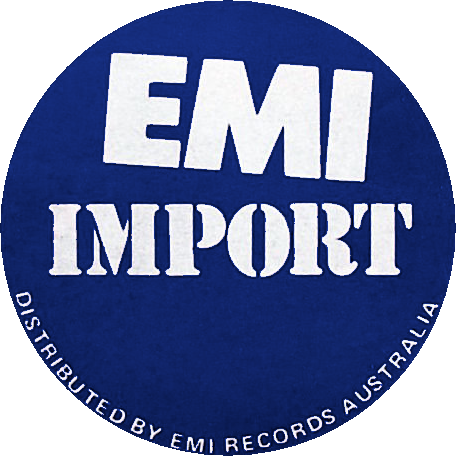
In the late 1960s, EMI (Australia) added EMI UK and Capitol US reel-to-reel tapes and cassettes to its local catalogue because it did not yet have the facilities required to manufacture these formats locally.
As a result, someone visiting an Australian record store that stocked reel-to-reel tapes or cassettes could conceivably find the US-only Yesterday And Today sitting alongside a UK copy of Revolver.
Magical Mystery Tour
The first Beatles LP to receive an official EMI (Australia) import release was Magical Mystery Tour.
Following the popularity of the Australian World Record Club edition, together with solid orders for the American album through EMI’s international ordering system, EMI (Australia) decided to import copies of the Capitol release directly from the United States.
Even after EMI (Australia) released Magical Mystery Tour locally on cassette and reel-to-reel tape in September 1974, US-manufactured LPs continued to be imported. The album was not manufactured on LP in Australia until July 1979.
The Australian LP was issued in an inferior gatefold sleeve and retained the duophonic versions of ‘Penny Lane’, ‘Baby, You’re A Rich Man’ and ‘All You Need Is Love’. Although the original 24-page booklet was not bound into the sleeve, a number of copies included a loose, US-printed booklet.
The 1975 imports
Between April and July 1975, EMI (Australia) officially imported three further Beatles albums:
The Beatles Story from the United States
Something New from West Germany
The Beatles Beat from West Germany
Each title was available for only a short period, ranging from several weeks to a few months.
Picture discs
To coincide with the release of the 1978 film Sgt. Pepper’s Lonely Hearts Club Band, directed by Michael Schultz and starring Peter Frampton and the Bee Gees, EMI (Australia) imported the UK picture-disc edition of the Beatles album as part of a broader Sgt. Pepper promotion.
Renewed interest generated by the film and EMI’s promotion returned the album to the Australian chart in September 1978. It reached number 30 and remained on the chart for 15 weeks.
Following the success of the Sgt. Pepper picture disc, EMI (Australia) imported US copies of the Abbey Road picture disc in February 1979. The release was not a success in Australia and, combined with the poor pressing quality of the American edition, sank with barely a trace.
New Zealand singles
Around June 1979, EMI (New Zealand) issued a series of singles featuring songs that had previously been hits in Britain. The series included two Beatles singles:
‘Can’t Buy Me Love’/‘You Can’t Do That’ (BRIT 6)
‘Help!’/‘I’m Down’ (BRIT 45)
EMI (Australia) officially imported these two releases, examples of which can be found on their respective Singles pages.
EMI (New Zealand) also released a corresponding series of Australian hits. This included ‘Roll Over Beethoven’/‘Hold Me Tight’ as AUS 32. Despite its Australian-themed catalogue number, the single was intended for the New Zealand domestic market and was not officially imported into Australia.
Singles collections
In June 1980, EMI (Australia) imported World Records’ The Beatles Collection, containing all 25 singles released in Britain between 1962 and 1978.
This set became the forerunner to The Australian 20th Anniversary Singles Collection, which EMI (Australia) issued locally in October 1982.
Despite the availability of the Australian collection, EMI (Australia) began importing copies of EMI UK’s The Beatles Singles Collection in June 1983—a release that had itself been prompted by the Australian set.
The 1981 UK mono albums
Many Beatles collectors are aware that EMI UK reissued the original ten Beatles mono albums as a boxed set in August 1982, primarily for export. What is less widely known is that the albums had first been issued individually in July 1981, using original 1960s tube cuts in most cases.
Shortly before their release, EMI UK informed EMI (Australia) of the forthcoming albums and offered the choice of importing them, manufacturing them locally or passing on them altogether. EMI (Australia) chose to import approximately 500 copies of each title.
The albums were distributed to department stores and record shops with a street date of 27 July 1981. Beatles For Sale and Yellow Submarine were delayed and did not become available until several weeks later.
All the imported copies had been sold by the end of 1981 and no further quantities were ordered. Australian buyers could still obtain the albums independently through record stores willing to place special import orders, but these later copies were not part of EMI (Australia)’s official allocation.
It would be another 13 months before EMI UK issued the albums together as a boxed set. By then, several of the records had received new solid-state recuts by mastering engineer Harry T. Moss.
The following matrices have been identified on records from the 1981 mono series imported by EMI (Australia):
The label and record do not always correspond correctly. Some copies of A Hard Day’s Night have mono labels attached to stereo records carrying YEX matrices. Conversely, some copies of Yellow Submarine contain mono records carrying XEX matrices but have stereo labels.
These anomalies make examination of the run-out matrices essential, as the label alone may not reliably identify which version of the record is inside the sleeve.
Other official imports
Other notable Beatles releases officially imported by EMI (Australia) included, but were not limited to:
- the Japanese Beatles Box
- the UK edition of The Beatles’ Ballads, imported to meet strong local demand before Australian pressing commenced
- the French 20 Golden Hits
- various UK picture discs released during the 1980s
- the initial Beatles compact disc releases